_edited.jpg)
Cobblestones


My guest today shares an excerpt from his new bestselling novel, Cobblestones, which is based on the true story of immigrants seeking refuge in late nineteenth century New Orleans.
~ Samantha
Cobblestones: An Excerpt
Guest Post by S.R. Perricone
October 15, 1890
11:30PM
The rain had finally yielded to a soft chilly mist. Girod Street glowed in the lambent flickering of gas street lamps, and nascent electrical lights at the intersections. With the mist, the streetscape would be the vision of a drowsy man suddenly awaken in a dimly lit room. But David Hennessy knew his way home, as he fixed his keen eyes on the faint glow of the electric light hanging at Girod and Basin Streets. He was alone, except for a young boy who ran past him, whistling to announce his presence in the gloom. Not hearing the clopping of hooves in the mist, Hennessy crossed Basin Street. Seeing the oil lamp his mother customarily left in the front window at night, Hennessy paused in front of 275 Girod Street, to dig in his pants pocket and retrieve his house key.
As he felt for his long brass key, he heard the shuffling of feet behind him. Even in the shadows, he knew he wasn’t alone. As he turned to his left, the night exploded with shotgun blasts and pistol fire from five different directions. Hennessy, a strong tall Irishman, drew his silver Colt revolver, and returned fire at the misty silhouettes, as they scattered—some towards Basin Street and some towards Franklin Street. Hennessy’s lean body was on fire, but he chased two of his assailants towards Basin Street, firing at least two shots at them. But his exertion caused his wounds to pump blood, and he collapsed on the front steps of the Gillis Store at 189 Basin Street.
Boylan Patrolman J.C. Roe, walking the beat on Basin Street, hearing the fusillade, and seeing shadowing figures wrapped in oil clothe coats, fired a shot at the fleeing figures, which was returned by one of the assailants. The shot creased Roe’s left ear. Hearing the shooting, Billy O’Connor raced down Girod Street towards Basin. There he found Hennessy slumped on the steps of the store. “What happened David? Who shot you?” O’Connor asked.
Hennessy, bleeding profusely, and with a pierced left lung, gasped something only O’Conner heard, but when repeated by O’Connor, would ignite a series of cascading events, which flowed from muddy streets of New Orleans, to Washington, D.C., and to Rome, Italy. Not even O’Conner, could anticipate what would happen next, for an ominous black cloud of ethnic prejudice descended upon America, and remained for decades to come.
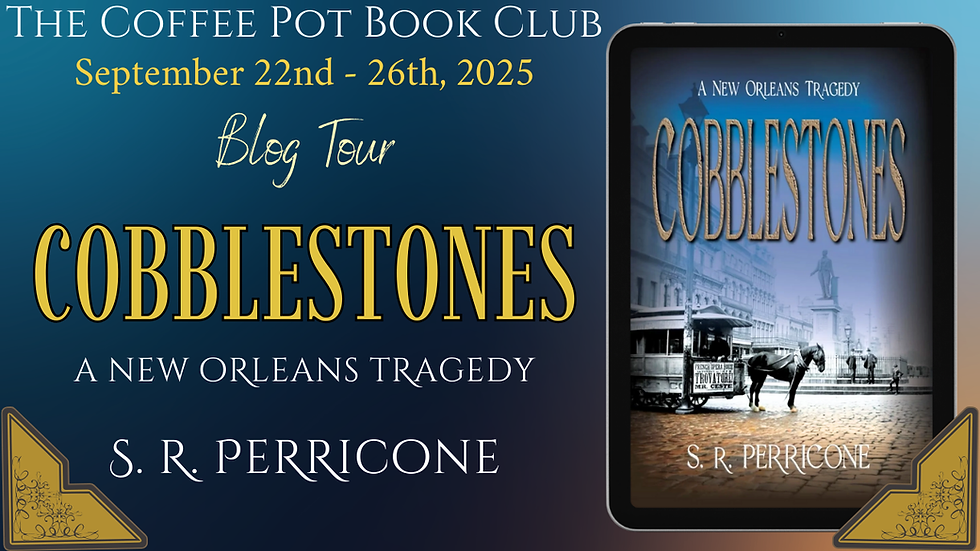
The turbulent history of Post-Reconstruction New Orleans collides with the plight of Sicilian immigrants seeking refuge in America.
Antonio, a young man fleeing Sicily after avenging his father's murder, embarks on a harrowing journey to New Orleans with the help of Jesuit priests expelled from his homeland. However, the promise of a fresh start quickly sours as Antonio becomes entangled in a volatile clash of cultures, corruption, and crime.
In the late 19th century, Italian immigrants in New Orleans faced hostility, exploitation, and a brutal system of indentured servitude. Antonio becomes a witness to history as a bitter feud over the docks spirals into violence, culminating in the assassination of Irish police chief David C. Hennessy. The ensuing trial of nine Italians and the shocking lynching of eleven innocent men ignited international outrage, threatening to sever ties between the United States and Italy.
Caught in the crossfire of prejudice and power struggles, Antonio fights to survive while grappling with his own past and future. His journey weaves a gripping tale of resilience, betrayal, and the enduring hope for justice. Cobblestones: A New Orleans Tragedy is a poignant reminder of the human cost of intolerance and the courage it takes to rebuild a life from ashes.
"A phenomenal epic account of a forgotten slice of New Orleans history for fans of Scorsese / Coppola-type cinematic dramas such as Midnight Vendetta and The Godfather!"~ HFC Reviews
Connect with S.R. Perricone

Sal Perricone, a graduate of Loyola University of New Orleans with a BA (1975) and JD (1979), has dedicated his career to law enforcement, legal practice, and public service. Beginning as a sergeant with the Jefferson Parish Sheriff’s Department, he progressed to detective with the New Orleans Police Department before practicing law privately in New Orleans. In 1985, he joined the Federal Bureau of Investigation as a Supervisory Special Agent, specializing in financial crime investigations and organized crime.
In 1991, Sal Perricone transitioned to the U.S. Attorney’s Office for the Eastern District of Louisiana, where he served as Chief of the Organized Crime Strike Force and Senior Litigation Counsel until retiring in 2012. Over his illustrious career, he prosecuted significant cases involving La Cosa Nostra, public corruption, and white-collar crime. He earned numerous accolades, including multiple Director’s Awards and the Attorney General’s Award for his role in establishing the Katrina Fraud Task Force.
An adjunct professor at Tulane University and the University of New Orleans, Sal Perricone has trained law enforcement professionals across the nation. Post-retirement, he has authored two novels with positive Catholic themes, Blue Steel Crucifix and The Shadows of Nazareth. A Brother Martin alumnus, he continues to inspire with his dedication to justice and ethics.
Connect with Sal on Facebook, Amazon Author Page, and Goodreads.


What makes this excerpt interesting is the way one event opens up a much wider picture of the period. The tension around prejudice, corruption and social change gives the story more depth than a simple historical retelling.
There’s a similar lesson in construction supervision, where individual incidents rarely make sense without the wider context. Level 4 Construction Site Supervision assessor-verified answers PDF often need to show how supervisors explain what happened, what conditions contributed to it and what actions were taken afterwards. Good evidence is usually strongest when it shows the full picture rather than just the final outcome.
This excerpt does a strong job of showing how one historical event can open up much wider themes around prejudice, corruption, migration and social tension. That layered context is what makes historical fiction engaging, because individual events start to reveal the bigger forces shaping people’s lives.
A similar principle applies in senior construction management, where decisions rarely sit in isolation. Candidates using NVQ Level 7 Senior Construction Site Management answers assessor verified often need to explain not just what happened on a project, but how programme, cost, risk, stakeholders and wider organisational pressures influenced the final decision. Strong evidence always becomes more convincing when the wider context is made clear.
The excerpt does a great job of creating atmosphere while also grounding the story in a difficult period of New Orleans history. The description of the Hennessy shooting immediately creates tension, but what makes the wider story especially interesting is how one event becomes connected to immigration, prejudice, corruption and international consequences.
That combination of historical context and individual experience is a good reminder that strong explanations need both detail and a clear understanding of the wider situation. The same applies in vocational learning, where NVQ Level 6 Construction Site Management example answers can help candidates see how real workplace experiences, decisions and responsibilities can be explained with enough context to demonstrate professional competence. An engaging introduction to what sounds like…
I really enjoyed this excerpt from Cobblestones. The way historical details, atmosphere, and real-life events are brought together shows how much research and idea-gathering can go into developing a compelling story. It reminded me that good writing, much like putting together an NVQ portfolio in Construction, Health & Safety, or Electrical installation, is often about collecting the right evidence, organising ideas, and turning individual details into a clear and meaningful picture. A fascinating read and a great example of how research can bring a story to life.
Fulfilling rigorous membership requirements for professional engineering bodies relies on continuous skill refinement and expert mentorship. Pursuing accredited cpd ice options offers practitioners valuable preparation for technical reviews supported by the College of Contract Management. Expanding baseline capabilities improves project execution and interdisciplinary communication. Strategic professional education builds a solid foundation for leadership advancement in civil engineering.